One of my all-time favorite children’s books is Bear Snores On by Karma Wilson. It’s a delightful tale about a hibernating bear in his den while all his other animal friends have fun. I was reminded of this story recently while driving near Galena Creek Visitor Center, when I saw my first black bear!* I texted a photo of the bear to everyone in my contacts, but a friend pointed out that black bears are usually hibernating by early December when I encountered the bear.
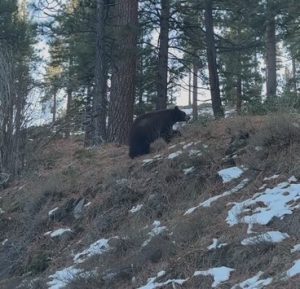
So, what gives? Why was the bear out and about? What woke them up? Fortunately for me, science has answers.
The fact is black bears hibernate to conserve energy during the winter months when food is unavailable. Mostly. However, according to the Nevada Department of Wildlife, “bears that continue to find and access unnatural food sources like garbage, bird feeders, pet food, and other human attractants may bypass hibernating altogether and stay active through the winter”. This causes major problems; in November and December 2023, the Tahoe Basin had 98 reports of property damage and home invasions by black bears. In North America, there are more than 43 thousand complaints annually about black bears entering homes. Due to increasing human development in the Sierra Nevadas and bear habitats, a black bear’s natural inclination to hibernate is decreasing.
What does this mean for people?
We need to be bear conscious year-round; whether we are water skiing in July or snow skiing in December; whether we car camp or tent camp, from Independence Day to New Year’s Day. However you choose to recreate in the Tahoe Basin, it’s important to respect the nature who already calls it home. How do we do that? First, make noise! Talk, laugh, sing, whistle- whatever it is, just make plenty of sounds. Black bears are skittish and tend to run away at the sound of humans. DO NOT approach bears or bear cubs. Mothers are defensive of their young and themselves. Don’t leave food scraps! Make sure to throw all trash and scraps away into bear-proof garbage cans. It may be tempting to leave items such as apple cores, or to burn leftover food, but leaving such items in campsites, trails, or recreation areas can cause bears to become habituated to humans. Leash your dog! Allowing dogs to bark or run at bears can put bears on the defensive, leashing them is safer for bears, you, and your pup. Here at Galena Creek Regional Park, all dogs must be leashed within 1 mile of trailheads and in day-use areas. Do not store food in your tent or cars. No matter what time of year you camp, keeping food or scented items in a tent is a bad idea. This can attract a hungry bear, and can put campers and bears in unsafe situations.
*The author would like to be clear that she has seen bears before, but always in zoos or media, this was her first wild bear.